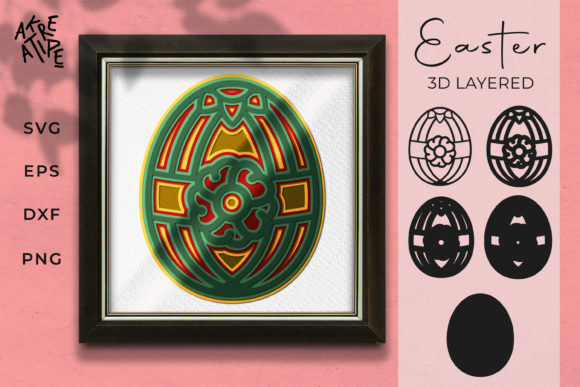
3D Easter Egg Mandala
Combining the timeless symmetry of mandalas with the playful form of Easter eggs opens a surprisingly rich creative space. A 3D Easter Egg Mandala is more than a decorative object; it is a structured design challenge where pattern meets volume. Whether you work in digital rendering, 3D printing, or physical craft, this fusion offers opportunities for precision, personalization, and seasonal storytelling. The appeal lies in its dual nature: the egg shape provides a curved canvas that forces patterns to adapt, while the mandala brings order and intricate detail. For anyone looking to create something memorable for spring holidays, branding campaigns, or personal projects, this concept delivers both aesthetic satisfaction and practical versatility.
What Makes 3D Easter Egg Mandala Unique
Unlike flat mandala designs, a 3D Easter Egg Mandala requires consideration of how patterns wrap around a three-dimensional surface. Lines must flow continuously from one side to the other, and motifs must scale to accommodate the curvature. This adds a layer of complexity that rewards careful planning. The result is an object that feels complete from every angle — not just a front-facing ornament but a fully realized sculpture. For designers, this means thinking in spherical coordinates rather than planar grids. For crafters, it translates to methods like layering paper strips, carving foam, or modeling in software such as Blender or Tinkercad. The uniqueness lies in the marriage of sacred geometry and seasonal iconography, offering a fresh take on both traditions.
Geometric Precision
For those who thrive on order, a geometric approach to the 3D Easter Egg Mandala emphasizes repetition and mathematical harmony. Using concentric rings, radial symmetry, and kaleidoscopic segments, you can create patterns that feel architectural. This style works exceptionally well with 3D printing, where precise lines and sharp angles translate into clean physical objects. Consider using vector-based tools like Adobe Illustrator or Inkscape to design the flat net before mapping it onto a sphere. The key is ensuring that repeating elements align at seam points. A geometric mandala on an egg can serve as a modern centerpiece or a modular component in a larger installation, such as a hanging mobile or a series of graduated eggs.
Organic Floral Motifs
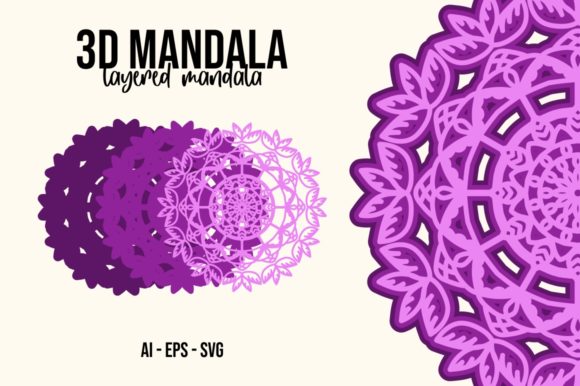
For a softer, more natural look, floral motifs bring life to the 3D Easter Egg Mandala. Think lotus petals, blooming branches, and vine-like spirals that follow the egg’s curve. This style works beautifully in papercraft, where layered cardstock or vellum creates depth and transparency. You can also achieve it through hand-painting or digital rendering for printed products like gift tags or packaging. The challenge here is maintaining visual coherence across the egg’s surface. A strong central axis helps anchor the design, while radial leaves or petals radiate outward. For physical crafting, use removable adhesive stencils to ensure flowers align consistently. This variation appeals to audiences who prefer warmth and tradition over stark geometry.
Cultural Fusion
Experiment by combining mandala motifs from different traditions with Easter symbolism. For example, marry Celtic knots with Easter lilies, or integrate henna-inspired patterns with egg forms common in Eastern European pysanky. This approach respects both sources while creating something new. A 3D Easter Egg Mandala that blends cultures can serve as a conversation piece or a teaching tool. Be mindful of accuracy and context — research patterns to avoid appropriation. Use elements like crosses, circles, and interlocking loops that resonate across multiple traditions. The fusion style is particularly effective for multicultural marketing campaigns or educational exhibits where diversity is celebrated.
For Designers and Makers
If you create products or patterns, the 3D Easter Egg Mandala offers a strong niche in seasonal markets. Sell digital files on platforms like Etsy or MyMiniFactory for 3D printing or laser cutting. Offer kits with pre-cut paper strips and instructions for assembly. The mandala’s inherent complexity adds perceived value, allowing you to price higher than simpler egg ornaments. Focus on clear assembly guides and scalable designs that work on different egg sizes — from tiny pendant eggs to large tabletop sculptures. For physical crafters, consider using materials like birch plywood, acrylic, or resin. Test your files thoroughly for printability: check for overhangs, thin walls, and support structures. A well-executed design can become an annual bestseller.
For Marketers and Business Owners
Seasonal branding benefits from tangible, shareable assets. A 3D Easter Egg Mandala can become a branded giveaway at events, a limited-edition packaging insert, or a social media visual. Print your logo subtly within one of the mandala’s segments, or use the egg as a container for product samples. The intricate pattern draws attention and encourages photography, ideal for user-generated content campaigns. For digital marketing, create an animated 3D render of the egg rotating, revealing the pattern gradually. This works for email headers, website banners, or short video ads. The key is to keep the design clean — don’t overcrowd with brand elements. Let the mandala’s beauty do the heavy lifting while your brand remains a subtle signature.
For Educators and Hobbyists
Teaching geometry, symmetry, or cultural studies becomes more engaging with a tangible object. A 3D Easter Egg Mandala project can illustrate concepts like radial symmetry, tessellation, and 3D mapping. In classroom settings, have students design their own patterns on paper templates before transferring to foam or clay eggs. Discuss the mathematical principles behind mandalas — ratios, repetition, and golden angles. For hobbyists, crafting a mandala egg offers a focused, meditative activity. The repetitive steps of cutting, layering, or coloring can be relaxing. Provide templates at different difficulty levels so beginners can start with simple radial patterns and advanced crafters can tackle intricate multi-layered designs. This adaptability makes the 3D Easter Egg Mandala a year-round project, not just a seasonal one.
Adapting for Different Formats and Platforms
The same 3D Easter Egg Mandala concept can take radically different forms depending on your output medium. For digital platforms, create high-resolution renders in JPEG or GIF format, or interactive 3D models for web viewers using WebGL. Use lighting and shadows to emphasize depth in the mandala’s layers. For social media, short looping videos of the egg rotating are highly engaging — aim for 15–30 seconds with a clean background. For physical products, consider the scale and durability. A small egg for jewelry is different from a large garden ornament. Materials like PLA filament for 3D printing offer quick prototypes, while resin or ceramic provides a premium finish. If manufacturing in bulk, injection molding with multi-part molds can replicate intricate patterns efficiently. Always test one unit before committing to production.
Keeping Your Designs Clear and Effective
Clarity is crucial in a 3D Easter Egg Mandala because complex patterns can become muddled on a curved surface. Follow these principles:
- Scale patterns appropriately. Details too small will be lost in physical objects; details too large may appear sparse. Test print at actual size to check visibility.
- Use contrasting colors or textures. In 3D printing, varying layer heights or using dual-extrusion can create visual separation. In papercraft, emboss or layer different paper weights.
- Maintain a strong central axis. Most mandalas benefit from a clear focal point at the egg’s tip or center. This anchors the design and guides the eye.
- Simplify where needed. Not every curve needs a thousand lines. A balanced design with clear negative space often reads better than one with constant density.
- Test for repetition errors. In digital patterns, check that radial segments match perfectly at connection points. A slight offset breaks the mandala’s harmony.
For consistent results, document your process. Keep a design journal with sketches, dimensions, and material notes. This helps replicate successful designs and iterate on failures.
Getting Started with 3D Easter Egg Mandala
Begin with a simple sphere or egg primitive in your preferred software — Blender, Fusion 360, or even a physics-based sandbox like Sandboxels for rough concepts. Sketch your mandala pattern on paper first, focusing on radial symmetry and repeating elements. Use image-mapping tools to project your 2D pattern onto the 3D egg shape. Adjust for distortion at the poles. If crafting physically, start with a foam or wooden egg base and apply your pattern using washi tape, paint, or decoupage. For 3D printing, design your egg in two halves that snap together, allowing room for small items inside — a hidden surprise that adds functionality. Test your pattern on a low-resolution print before finalizing. Iterate based on how the curve affects perception.
The 3D Easter Egg Mandala is not just a seasonal novelty. It is a flexible form that blends art, math, and making. Whether you produce it as a digital asset, a limited-run gift, or a teaching aid, the combination of sacred geometry and Easter symbolism offers a distinctive way to engage your audience. Focus on clarity, test your outputs, and let the pattern’s natural rhythm guide the eye. With careful planning, your 3D Easter Egg Mandala can be both beautiful and functional, earning its place in portfolios, homes, and campaigns.